Curcumin is the powerhouse behind turmeric's healing properties — but most people don't know how to unlock it. Here's the science, and the Kerala wisdom.
If you cook with turmeric or take it for health, you've probably heard the word "curcumin" thrown around. It's the compound that gives turmeric its golden colour and most of its healing properties. But here's what most people don't know: the way turmeric is grown and processed makes all the difference to how much curcumin you actually get — and whether your body can even use it.
What curcumin actually does
Curcumin is a natural anti-inflammatory — it helps calm the swelling and irritation linked to most modern health problems, from joint pain to heart disease, without the side effects of synthetic drugs. It's also a powerful antioxidant, neutralising the free radicals that damage cells and speed up ageing, while boosting your body's own antioxidant enzymes.
It has shown real promise for joint health, and some studies suggest it can even cross the blood-brain barrier to support brain function. That's why turmeric has been used in Ayurveda for clarity and mood for centuries.
But here's the catch: curcumin is notoriously hard for the body to absorb.
The absorption problem (and how to fix it)
Curcumin is fat-soluble and gets broken down quickly by the liver. So sprinkling turmeric into water passes straight through. People in Kerala have known how to fix this for generations:
- Pair it with black pepper. Piperine increases curcumin absorption by up to 2,000%. In Kerala cooking, turmeric and pepper have always gone together. There's a reason for that.
- Take it with fat. Coconut oil, ghee, or olive oil help curcumin absorb through the lymphatic system. Golden milk has been a staple in Kerala homes for generations.
- Spread your intake through the day — morning tea, lunch curry, evening golden milk — to keep a steady supply in your system.
How we grow and process our turmeric
Most turmeric sold in India is grown with chemical fertilisers and processed industrially — boiled quickly, machine-dried, sometimes polished with synthetic agents. That strips away the oils and reduces curcumin.
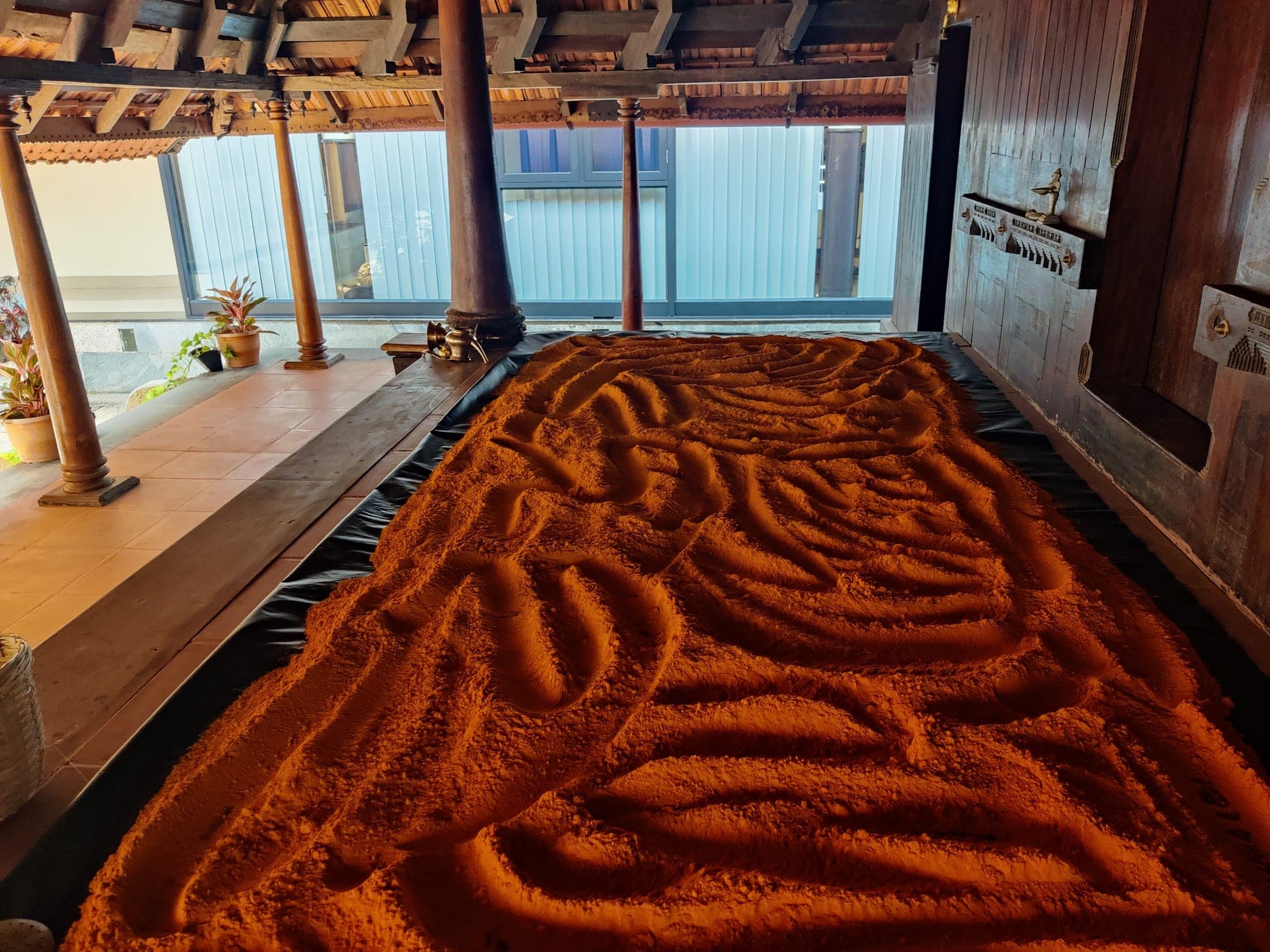
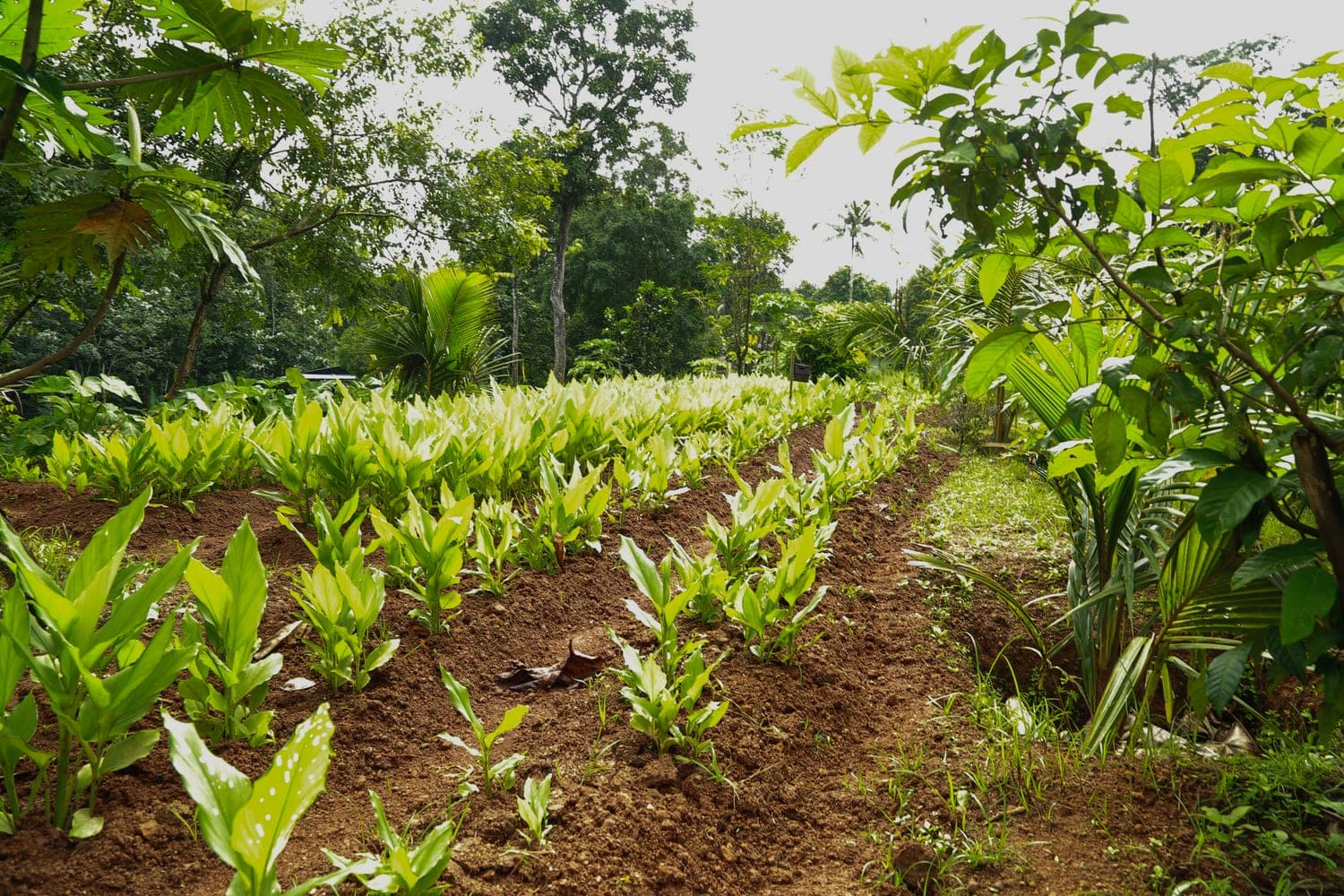
We do things differently. Our turmeric is grown in Kerala's naturally rich soil without synthetic pesticides or urea. After harvest we steam-process the fresh rhizomes slowly, then sun-dry them on clean stone platforms. The result is lab-tested at 5.47% curcumin — nearly three times the commercial average of under 2%.
Most commercial turmeric contains less than 2% curcumin. Ours is lab-tested at 5.47%.
When you choose turmeric grown and processed traditionally, you're getting more than a spice — you're getting the full medicinal value, the way nature intended.
Venugopal Padmanabhan
Nature's Gold Farms