We've been farming without chemicals long before the paperwork. Here's what it's meant for our soil, our health, and the land we live on.
In a market full of green claims, it's easy to lose sight of what actually matters.
Yes, our spices are PGS-India Green certified. But the truth is, we've been farming this way long before the paperwork. We've never used chemicals on our land. No urea, no sprays, no artificial boosters. Just compost, patience, and traditional practices.
What it means to grow without chemicals
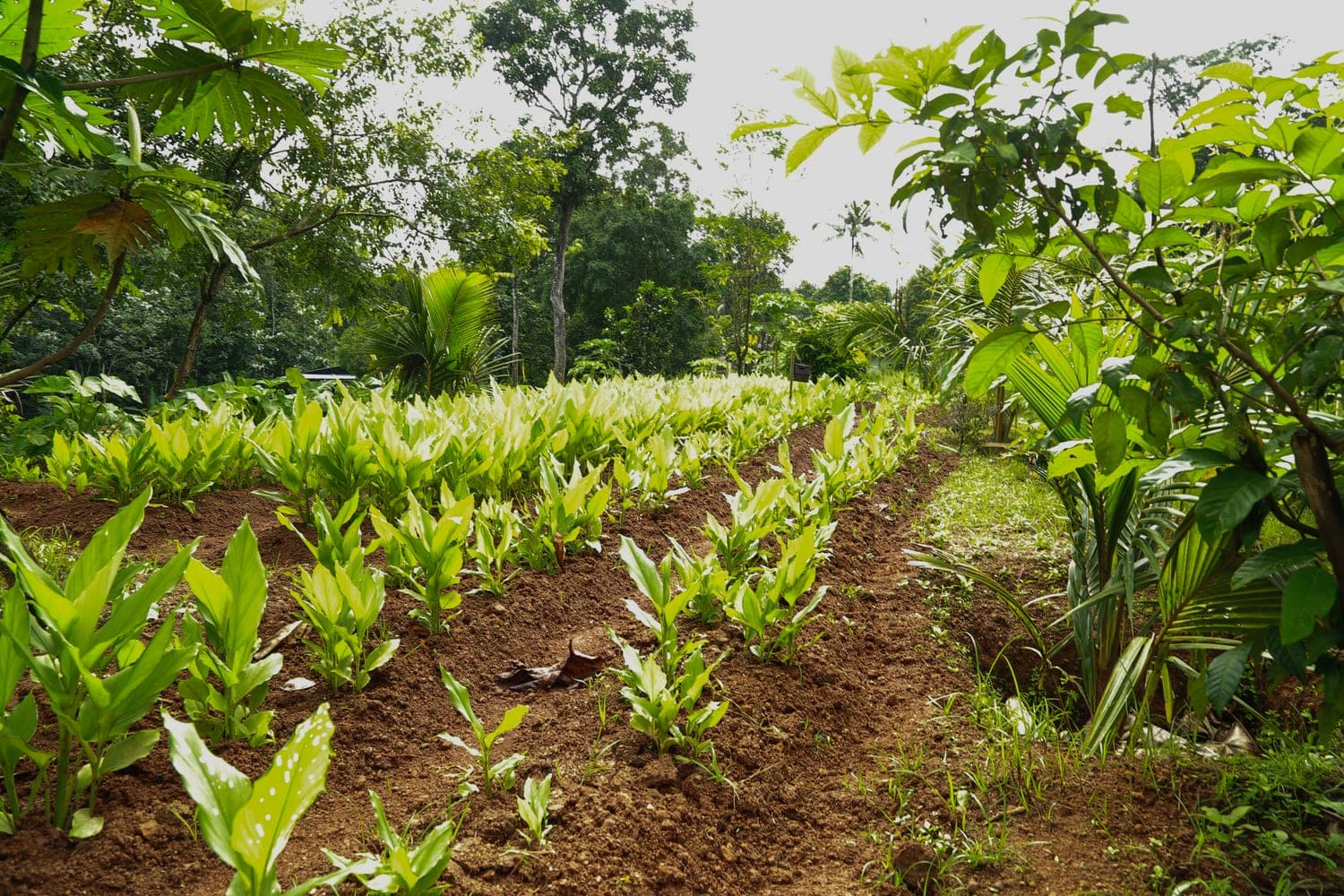
The land has never seen chemical treatment — rare in today's farming. We rely on:
- Cow dung compost made at the farm
- Dried leaf mulch to retain moisture
- Intercropping of turmeric, pepper, and ginger under shade trees
- Neem-based solutions for pest control
- Manual weeding and mulching, no herbicides
The soil started repairing itself
Within three years, it became obvious. The soil stayed moist long after the rains. Earthworms returned in large numbers. The texture turned from dry dust to dark, spongy matter.
We later read about regenerative farming and realised we were already practising many of its principles.
One teaspoon of living soil can contain more than a billion microorganisms. That's where real fertility comes from — not the bag or bottle.
Health isn't just about what you eat
It's also about how the food was grown. Many chemicals used in farming today leave residues that aren't visible and accumulate in the body over time. By farming without chemicals, we remove that uncertainty. What we grow is what we eat in our own home, every day.
We don't polish our turmeric. We don't add colour to our chillies. The pepper is sorted, not graded. We do it this way because it's how we'd want to receive it. If it's not good enough for home, it's not good enough to offer others.
Venugopal Padmanabhan
Nature's Gold Farms